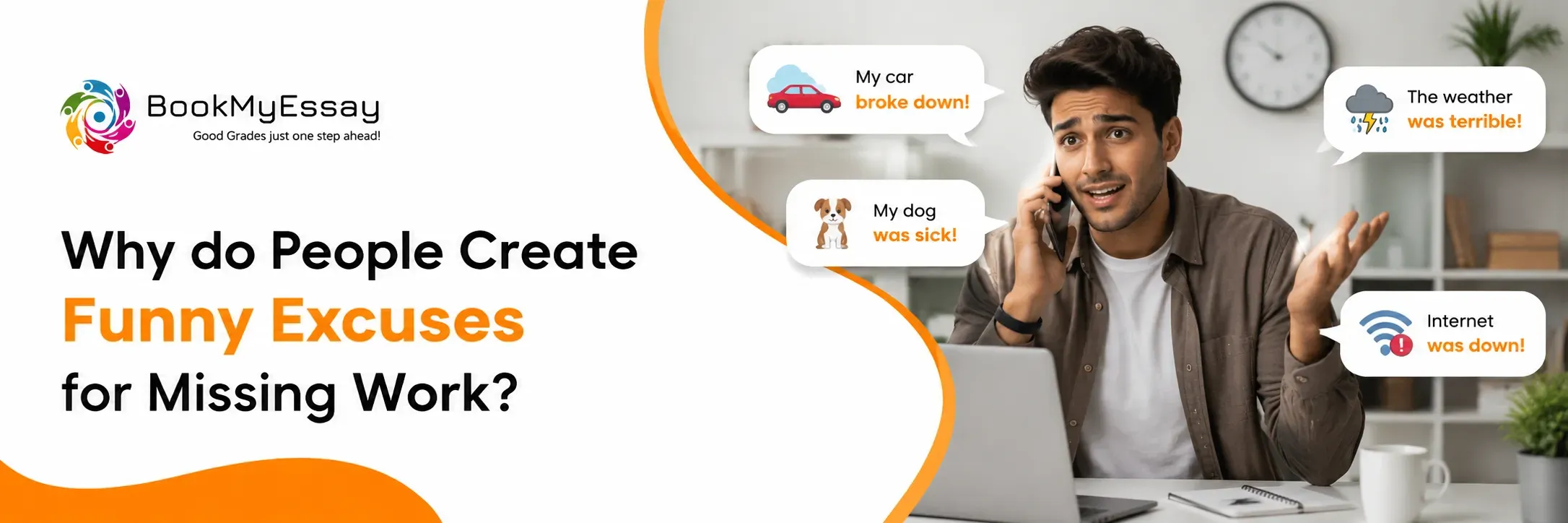


Why Do People Create Funny Excuses for Missing Work?
In every workplace, school, or academic setting, there comes a time when someone feels the need to skip responsibilities. While some people choose straightforward honesty, others lean into creativity—sometimes producing the funniest excuses for missing work essay homework help scenarios imaginable. But why do people do this? Why not just say the truth? This blog explores the psychology, social behavior, and modern academic pressures that lead individuals to craft funny excuses instead of simply admitting they need a break or assistance.
The Psychology Behind Funny Excuses
At its core, creating a funny excuse is a defense mechanism. People often feel uncomfortable admitting they are overwhelmed, unprepared, or simply not in the mood to work. Humor acts as a buffer. When someone says something like, “My laptop caught a virus… and then I caught one too,” they are not just avoiding responsibility—they are trying to soften the situation. Humor reduces tension and makes the excuse more memorable and sometimes even forgivable. Additionally, people fear judgment. Whether it’s a boss, teacher, or client, the pressure to appear responsible leads individuals to mask the truth with creativity.
Avoiding Consequences with Humor
One of the biggest reasons people invent funny excuses is to avoid consequences. Missing work or failing to submit assignments can lead to penalties, poor evaluations, or even job loss.
Instead of saying:
“I didn’t complete the task,”
People might say:
“My dog submitted the wrong file.”
It sounds ridiculous, but humor can sometimes make authority figures more lenient. A well-crafted funny excuse can:
- Reduce anger
- Shift focus from the mistake
- Make the situation less confrontational
This is especially common among students seeking homework assignment help but failing to meet deadlines.
Academic Pressure and Creative Excuses
Students today face intense academic pressure. Between exams, projects, and extracurricular activities, it’s no surprise that deadlines are sometimes missed. Instead of admitting they need essay homework help or assistance with complex topics like capital budgeting homework help, students often resort to funny excuses.
Some classic examples include:
- “My Wi-Fi stopped working only on the assignment page.”
- “I accidentally submitted my grocery list instead of my homework.”
These excuses highlight a deeper issue: students often struggle but hesitate to ask for help. This is where professional services like a homework writing agency become relevant, offering structured support instead of last-minute panic.
Social Influence and Peer Culture
Funny excuses are also influenced by social culture. People share and laugh about them online, making them more normalized.
In offices and classrooms, there’s often a shared understanding that:
- Everyone has used an excuse at some point
- The funnier it is, the more memorable it becomes
This creates a cycle where individuals try to outdo each other with increasingly creative excuses.
For example:
“I couldn’t attend the meeting because my alarm clock and I had a disagreement.”
Such humor becomes part of workplace storytelling, reinforcing the behavior.
Fear of Failure and Perfectionism
Another major reason behind funny excuses is the fear of failure. Many individuals struggle with perfectionism. If they cannot do something perfectly, they may avoid doing it altogether.
Instead of admitting:
“I didn’t understand the assignment,”
They might say:
“Aliens abducted my notes.”
This behavior is particularly common among students who hesitate to seek buy homework online help services or professional guidance due to stigma.
Funny excuses act as a shield, hiding insecurity behind humor.
The Role of Procrastination
Procrastination is one of the biggest drivers behind missed work and assignments. When people delay tasks until the last minute, they often run out of time.
At that point, they have two options:
- Admit they procrastinated
- Create an excuse
Many choose the second—and make it funny to ease the situation.
For instance:
“I was about to start, but then I started thinking about starting.”
While humorous, it reflects a real struggle with time management.
Workplace Culture and Flexibility
Modern workplaces are becoming more flexible, but not all environments encourage honesty. In strict workplaces, employees may feel safer using humor than admitting personal struggles.
Funny excuses can:
- Maintain professionalism (in a strange way)
- Avoid oversharing personal issues
- Keep interactions light
However, overusing such excuses can damage credibility over time.
The Internet’s Influence on Excuses
The internet has made funny excuses more widespread than ever. Lists of the funniest excuses for missing work assignment help requests circulate widely, inspiring people to create their own.
Social media platforms have turned excuses into entertainment. People now:
- Share their best (or worst) excuses
- Compete for creativity
- Normalize avoidance behavior
This trend blurs the line between humor and responsibility.
When Funny Excuses Backfire?
While funny excuses can sometimes work, they can also backfire badly.
Potential risks include:
- Losing trust
- Appearing unprofessional
- Facing stricter consequences
For example, a manager might laugh once—but repeated behavior can lead to serious repercussions.
Similarly, students who repeatedly rely on excuses instead of seeking homework assignment help may fall behind academically.
A Better Alternative: Asking for Help
Instead of relying on humor to escape responsibility, a more effective approach is to seek help.
Students can benefit from:
- Homework writing agency services for structured support
- Essay homework help for improving writing skills
- Capital budgeting homework help for complex financial topics
Professionals, on the other hand, can:
- Communicate openly with managers
- Request deadline extensions when needed
- Prioritize tasks more effectively
Choosing to buy homework online help or seek guidance is far more productive than inventing excuses.
Honesty vs. Humor: Finding the Balance
Humor is not inherently bad. In fact, it can:
- Build relationships
- Reduce stress
- Make communication enjoyable
However, it should not replace accountability.
A balanced approach would be:
- Use humor sparingly
- Be honest when it matters
- Take responsibility for missed work
For example:
“I underestimated the time required, but I’m working on it now.”
This approach builds trust while maintaining professionalism.
Conclusion
Funny excuses for missing work or assignments are more than just jokes—they reflect deeper psychological, social, and cultural factors. From fear of failure to academic pressure and procrastination, people often use humor as a coping mechanism. While these excuses can be entertaining, they are not a sustainable solution. Over time, they can damage credibility and hinder personal and professional growth.