

How Do Enzymes Regulate Metabolic Reactions in Human Body?
Understanding how enzymes regulate metabolic reactions in the human body is a fundamental concept in biology. Whether you are a student exploring topics about biology assignment help or someone interested in human physiology, enzymes play a crucial role in maintaining life. These biological catalysts ensure that chemical reactions occur efficiently, rapidly, and under controlled conditions necessary for survival.
In this blog, we will explore the structure, function, and regulatory mechanisms of enzymes, along with their importance in metabolism. This guide is also helpful for students seeking biology assignment help, biology dissertation writing help, or computational biology assignment help.
What Are Enzymes?
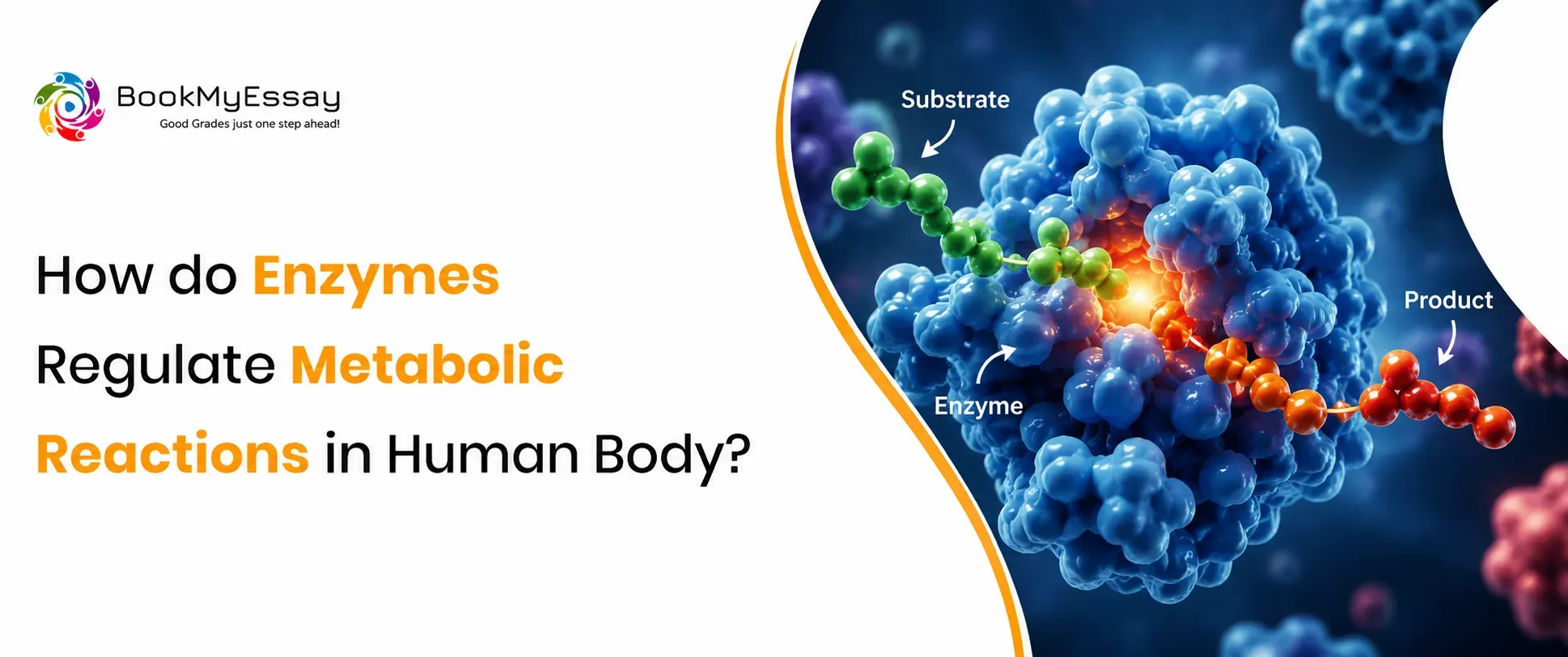
Enzymes are specialized proteins that act as catalysts in biochemical reactions. They accelerate chemical processes without being consumed in the reaction. Each enzyme is highly specific, meaning it only binds to a particular substrate to carry out a specific reaction.
For example, digestive enzymes like amylase help break down carbohydrates, while proteases break down proteins. Without enzymes, most metabolic reactions would occur too slowly to sustain life. Students often encounter this topic when searching for topics about biology assignment help, as enzymes form the foundation of many biological processes.
Understanding Metabolism in the Human Body
Metabolism refers to all the chemical reactions that occur in the human body to sustain life. These reactions fall into two broad categories.
- Catabolism: Breaks down complex molecules into simpler molecules, releasing energy.
- Anabolism: The synthesis of complex molecules from simpler ones, requiring energy.
Enzymes regulate both these processes, ensuring that the body maintains balance, also known as homeostasis. This concept is widely discussed in biology assignment help resources due to its importance in human physiology.
Structure of Enzymes and Active Sites
Enzymes have unique three-dimensional structures that determine their function.. A specific region known as the active site binds to the substrate. The shape of the active site is complementary to the substrate, forming an enzyme-substrate complex.
Two primary models explain enzyme action:
Lock and key pattern. The substrate fits perfectly into the active site of the enzyme.
Induced fit model: The enzyme slightly changes its shape to match the substrate.
Understanding these models is essential for students seeking biology dissertation writing help, as they explain how enzymes achieve specificity and efficiency.
How Enzymes Regulate Metabolic Reactions?
Enzymes regulate metabolic reactions through several mechanisms:
1. Lowering Activation Energy
Every chemical reaction requires a certain amount of energy to begin, known as activation energy. Enzymes reduce this energy requirement, allowing reactions to occur faster and at lower temperatures.
This is one of the primary reasons enzymes are essential for life, as human body temperature is relatively low compared to conditions required for non-catalyzed reactions.
2. Enzyme Specificity
Each enzyme is specific to a particular substrate. This specificity ensures that only the desired reactions occur, preventing unnecessary or harmful chemical processes.
For example, enzymes involved in glycolysis only act on glucose molecules, ensuring efficient energy production.
3. Feedback Inhibition
- Feedback inhibition is a control mechanism in which the end products of a metabolic pathway inhibit enzymes involved earlier in the pathway. This prevents overproduction of the substance.
For instance, if enough ATP (energy) is produced, the enzymes responsible for its production are inhibited, maintaining balance in the body. - This concept is frequently discussed in computational biology assignment help, where pathways are analyzed using computational models.
4. Allosteric Regulation
Some enzymes have additional binding sites known as allosteric sites. Molecules can bind to these sites and either activate or inhibit the enzyme.
- Activators increase enzyme activity.
- Inhibitors decrease enzyme activity.
This allows fine control over metabolic reactions, ensuring the body responds quickly to changes in internal conditions.
Factors Affecting Enzyme Activity
Several factors influence how effectively enzymes regulate metabolic reactions:
Temperature
Enzymes function optimally at normal body temperature (around 37°C). Higher temperatures can denature enzymes, while lower temperatures slow down reactions.
pH Levels
Each enzyme has an optimal pH range. For example, pepsin works best in the acidic environment of the stomach, while trypsin functions in the alkaline environment of the small intestine.
Substrate Concentration
Increasing substrate concentration increases enzyme activity up to a certain point, after which the become saturated.
Enzyme Concentration
- Higher enzyme concentration leads to increased reaction rates, provided there is enough substrate available.
- These factors are commonly included in topics about biology assignment help due to their practical importance in experiments.
Role of Enzymes in Key Metabolic Pathways
Enzymes are involved in all major metabolic pathways, including:
Glycolysis
The breakdown of glucose into pyruvate involves multiple enzymes, each regulating a specific step.
Krebs Cycle
This cycle generates energy through enzyme-mediated reactions in the mitochondria.
Electron Transport Chain
- Enzymes facilitate the transfer of electrons to produce ATP, the primary energy currency of the cell.
- Understanding these pathways is essential for students seeking biology assignment help and computational biology assignment help, especially when analyzing biochemical networks.
Importance of Enzyme Regulation in Human Health
Proper enzyme regulation is crucial for maintaining health. Any imbalance can lead to diseases:
- Enzyme Deficiencies: Conditions like lactose intolerance occur due to the absence of specific enzymes.
- Genetic Disorders: Mutations can affect enzyme structure and function.
- Metabolic Diseases: Disorders like diabetes involve enzyme regulation issues.
Applications of Enzyme Study in Modern Biology
Enzyme research has significant applications in various fields:
Medicine
Enzymes are used in drug development and diagnostics. Many medicines target specific to treat diseases.
Biotechnology
Enzymes are used in industries such as food processing, pharmaceuticals, and biofuel production.
Computational Biology
With advancements in technology, computational tools are used to model enzyme behavior and predict reactions. This is a growing area for students seeking computational biology assignment help.
Why Students Need Biology Assignment Help?
Enzyme regulation is a complex topic that involves understanding biochemical pathways, molecular structures, and regulatory mechanisms. Many students seek biology assignment help to:
- Understand difficult concepts
- Complete assignments on time
- Improve academic performance
Similarly, advanced learners often look for biology dissertation writing help to conduct in-depth research on enzyme mechanisms and metabolic pathways.
Conclusion
Enzymes are essential for regulating metabolic reactions in the human body. They ensure that biochemical processes occur efficiently, accurately, and in a controlled manner. From lowering activation energy to enabling complex metabolic pathways, enzymes are at the core of life itself. Understanding how function and regulate metabolism is crucial not only for academic success but also for gaining insights into human health and disease. Whether you are exploring topics about biology assignment help, seeking biology assignment help, or working on advanced research with biology dissertation writing help or computational biology assignment help, mastering this topic will provide a strong foundation in biological sciences.