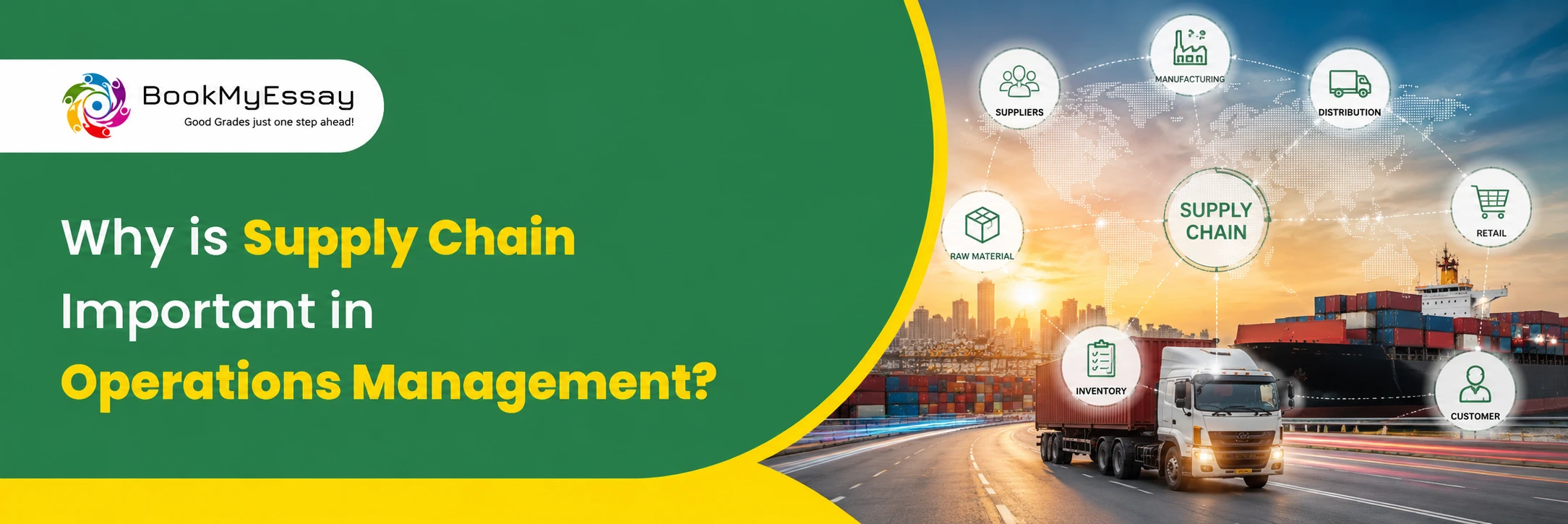


Why is Supply Chain Important in Operations Management?
In today’s competitive business world, companies must manage their products, services, and resources efficiently. This is where operations management and supply chain management play an important role. Many students search for operations management assignment help because these concepts are essential in business studies and can sometimes be difficult to understand. A supply chain is the complete process of moving products or services from suppliers to customers. It includes purchasing raw materials, manufacturing, transportation, warehousing, inventory management, and delivery.
Operations management focuses on planning, organizing, and controlling business operations to improve efficiency and productivity. Understanding the relationship between supply chain management and operations management is very important for students and businesses. This blog explains the meaning, importance, functions, benefits, and challenges of supply chain management in operations management in simple English for better understanding.
What is Supply Chain Management?
Supply Chain Management (SCM) refers to the coordination of all activities involved in producing and delivering goods or services. It ensures that the right product reaches the right customer at the right time and at the correct cost.
The supply chain process includes:
- Purchasing raw materials.
- Production and manufacturing.
- Inventory management.
- Transportation and logistics.
- Distribution to customers.
For example, a smartphone company purchases materials from suppliers, manufactures devices in factories, stores them in warehouses, and delivers them to customers through retailers or online stores. All these steps together form the supply chain.
Students often require operations management assignment help to understand how supply chain systems improve business performance and customer satisfaction.
What is Operations Management?
Operations management is the process of managing daily business activities to produce goods and services efficiently. It focuses on improving productivity, reducing costs, maintaining quality, and achieving organizational goals.
Operations management includes:
- Production planning
- Quality control
- Inventory management
- Process design
- Capacity planning
- Supply chain coordination
The main objective of operations management is to use resources effectively while delivering high-quality products and services.
Many universities provide assignments related to operations management, and students frequently look for data center operations assignment help and operation research center assignment Help to complete their academic tasks successfully.
Relationship Between Supply Chain and Operations Management
Supply chain management and operations management are closely connected. Operations management controls internal business activities, while supply chain management handles the external movement of goods and services.
For example:
- Operations management ensures products are manufactured efficiently.
- Supply chain management ensures products are delivered to customers on time.
Without a strong supply chain, even efficient operations cannot satisfy customers. Similarly, without proper operations management, supply chain processes may become slow and costly.
Both systems work together to improve business performance and customer experience.
Importance of Supply Chain in Operations Management
1. Improves Business Efficiency
One of the main reasons supply chain management is important is because it improves operational efficiency. A well-managed supply chain reduces delays, minimizes waste, and ensures smooth business operations.
Efficient supply chains help companies:
- Reduce production time
- Improve workflow
- Increase productivity
- Lower operational costs
For example, if raw materials arrive on time, production processes continue without interruption. This increases overall business efficiency.
Students studying business management often seek operations management assignment help to understand efficiency improvement techniques in modern organizations.
2. Reduces Operational Costs
Supply chain management helps companies save money by reducing unnecessary expenses. Businesses can optimize transportation, inventory, and production costs through effective supply chain planning.
Cost reduction methods include:
- Better inventory management
- Efficient transportation routes
- Reduced storage costs
- Lower production waste
Companies that manage supply chains properly can increase profits while offering affordable products to customers.
3. Enhances Customer Satisfaction
Customer satisfaction is one of the most important goals of operations management. A strong supply chain ensures that customers receive products on time and in good condition.
When supply chain systems function properly:
- Orders are delivered quickly
- Products remain available in stock
- Customers experience fewer delays
- Service quality improves
Satisfied customers are more likely to trust a business and make repeat purchases.
4. Supports Better Decision Making
Modern supply chains use technology and data analysis to improve decision-making. Managers can monitor inventory levels, customer demand, and transportation performance in real time.
Businesses use software systems to:
- Track shipments
- Forecast customer demand
- Analyze operational performance
- Improve resource planning
Students studying information systems may also require oracle universal content management assignment help because digital management systems are becoming important in supply chain operations.
5. Helps in Inventory Management
Inventory management is an essential part of operations management. Poor inventory control can lead to product shortages or excess stock.
Supply chain management helps businesses maintain the correct inventory levels by:
- Monitoring demand patterns
- Reducing overstocking
- Preventing shortages
- Improving warehouse management
Proper inventory management reduces costs and improves customer service.
6. Improves Communication and Coordination
Supply chain management improves coordination between suppliers, manufacturers, warehouses, and retailers. Effective communication ensures smooth business operations and reduces misunderstandings.
Better coordination helps businesses:
- Share information quickly
- Avoid delays
- Solve operational problems faster
- Improve teamwork between departments
This creates a more organized and efficient business environment.
7. Increases Competitive Advantage
Businesses with strong supply chains can compete more effectively in the market. Faster delivery, lower prices, and better customer service help companies attract more customers.
Competitive advantages include:
- Quick product delivery
- High product quality
- Lower operational costs
- Better customer relationships
Companies with advanced supply chain systems often achieve higher market success compared to competitors.
8. Supports Global Business Operations
Many companies operate internationally, which makes supply chain management even more important. Global supply chains involve suppliers, manufacturers, and customers from different countries.
Supply chain management helps businesses:
- Manage international logistics
- Handle customs and regulations
- Coordinate global transportation
- Maintain product availability worldwide
Global businesses depend heavily on efficient supply chain operations.
9. Reduces Business Risks
Supply chains help businesses identify and manage operational risks. Unexpected problems such as transportation delays, supplier shortages, or natural disasters can affect business performance.
Effective supply chain management reduces risks through:
- Backup suppliers
- Emergency planning
- Demand forecasting
- Inventory safety stock
Risk management ensures business continuity during difficult situations.
10. Encourages Technological Innovation
Technology plays a major role in modern supply chain systems. Businesses use automation, artificial intelligence, cloud computing, and data analytics to improve operational performance.
Popular technologies include:
- Enterprise Resource Planning (ERP) systems
- Warehouse automation
- RFID tracking systems
- Artificial intelligence tools
Students interested in technology-based management systems often search for data center operations assignment help and oracle universal content management assignment help to understand practical applications of technology in operations management.
Challenges in Supply Chain Management
Although supply chain management offers many benefits, businesses also face several challenges.
1. Transportation Delays
Unexpected transportation problems can delay product delivery and affect customer satisfaction.
2. Inventory Problems
Poor inventory management may lead to overstocking or stock shortages.
3. Rising Operational Costs
Fuel prices, labor costs, and storage expenses can increase supply chain costs.
4. Technological Issues
Businesses must continuously upgrade technology systems to remain competitive.
5. Global Disruptions
Events like pandemics, political conflicts, and natural disasters can interrupt supply chain operations worldwide.
Understanding these challenges helps businesses improve planning and operational strategies.
Role of Technology in Supply Chain Operations
Technology has transformed modern supply chain management. Companies now use digital tools to improve efficiency and reduce operational errors.
Important technologies include:
1. Artificial Intelligence (AI)
AI helps businesses forecast demand, optimize routes, and automate decision-making.
2. Cloud Computing
Cloud systems improve data sharing and communication between supply chain partners.
3. Data Analytics
Businesses analyze customer behavior and operational performance using data analytics tools.
4. Automation
Automated warehouses and robotics increase productivity and reduce manual labor.
Students learning advanced management systems frequently need operation research center assignment help to understand how analytical techniques improve operational decisions.
Benefits of Studying Supply Chain Management
Studying supply chain management provides students with valuable business knowledge and career opportunities.
Benefits include:
- Understanding business operations
- Improving analytical skills
- Learning problem-solving techniques
- Developing management abilities
- Gaining career opportunities in logistics and operations
Supply chain and operations management are among the fastest-growing career fields globally.
Conclusion
Supply chain management is an essential part of operations management because it helps businesses improve efficiency, reduce costs, manage inventory, and satisfy customers. A strong supply chain supports smooth business operations and increases organizational success.
Operations management and supply chain management work together to ensure products and services are produced and delivered effectively. Modern businesses rely heavily on technology, communication, and coordination to maintain competitive advantages in the global market.
Students studying these subjects often search for operations management assignment help, data center operations assignment help, operation research center assignment Help, and oracle universal content management assignment help to better understand academic concepts and practical applications.