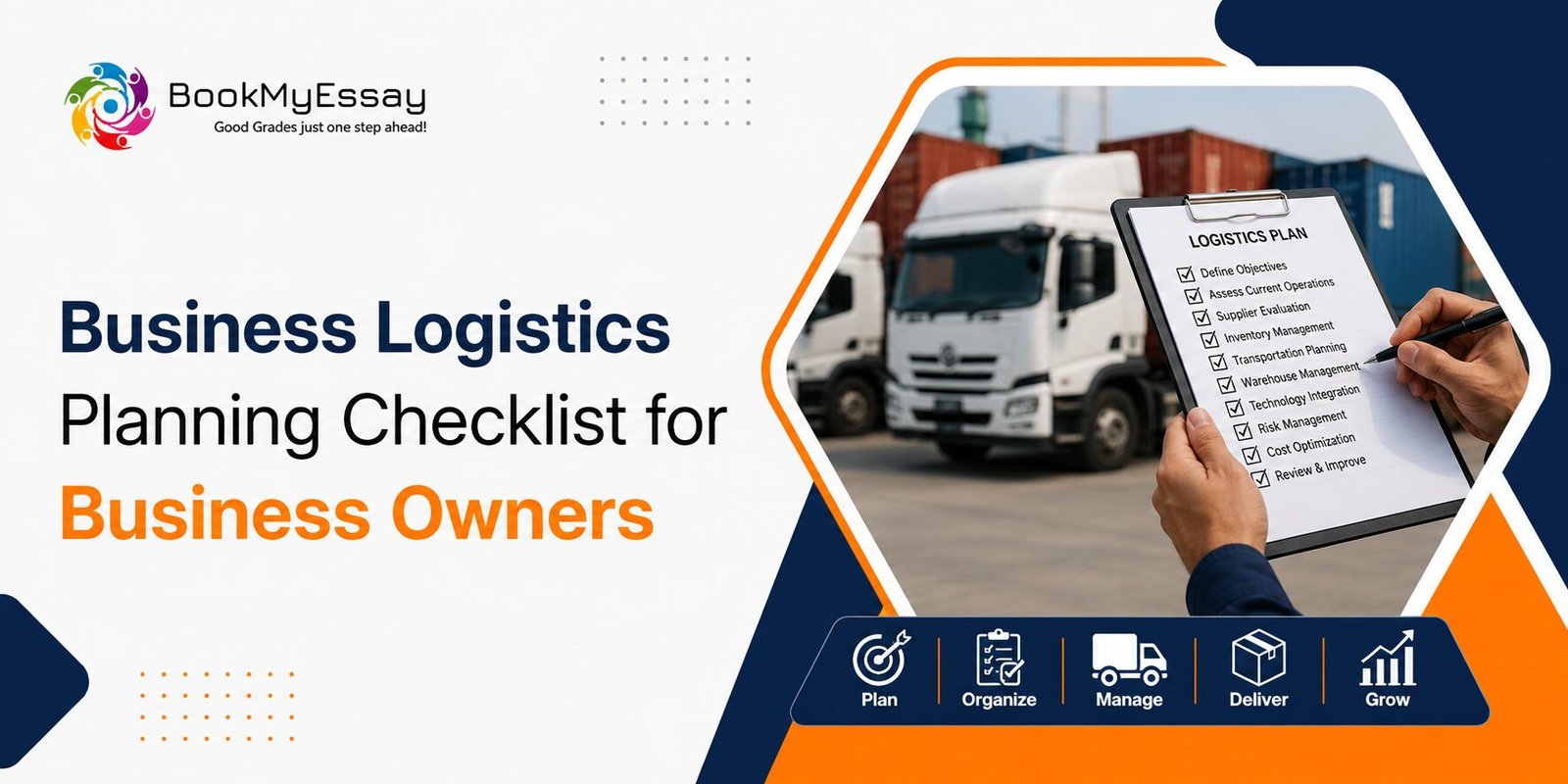


Business Logistics Planning Checklist for Business Owners
Running a successful business requires more than offering quality products or services. Effective logistics planning ensures that inventory, transportation, warehousing, and customer deliveries operate smoothly. If you’re a student learning these concepts, Business Logistics assignment help can simplify complex topics and improve your academic performance while helping you understand real-world business operations.
Why Business Logistics Planning Matters
Business logistics is the backbone of every successful organization. A well-planned logistics strategy reduces operational costs, improves customer satisfaction, minimizes delays, and strengthens supply chain performance. Business owners who regularly evaluate their logistics processes are better prepared to handle market changes and customer expectations.
Students studying logistics often analyze these business practices in their coursework. Seeking Business Logistics assignment help from reliable academic experts can provide valuable guidance on planning models, logistics frameworks, and supply chain optimization techniques.
Business Logistics Planning Checklist
Here are the essential steps every business owner should follow:
1. Define Business Objectives
Identify your logistics goals, such as reducing transportation costs, improving delivery speed, or increasing inventory accuracy.
2. Evaluate Supply Chain Performance
Review suppliers, distribution channels, and warehouse operations to identify bottlenecks and opportunities for improvement.
3. Optimize Inventory Management
Maintain the right inventory levels to avoid overstocking or stock shortages while improving cash flow.
4. Select Reliable Transportation Methods
Choose shipping partners based on cost, delivery speed, reliability, and customer service quality.
5. Implement Technology
Use logistics software, inventory management systems, and data analytics tools to improve operational efficiency and decision-making.
6. Monitor Key Performance Indicators (KPIs)
Track important metrics such as delivery time, order accuracy, transportation costs, inventory turnover, and customer satisfaction.
7. Prepare Risk Management Plans
Develop contingency strategies to handle supplier disruptions, transportation delays, or unexpected market changes.
Academic Support for Logistics Students
Business logistics assignments often require practical analysis, case studies, and strategic planning. Many students also seek industrial engineering assignment help to better understand process optimization and production systems that directly influence logistics efficiency.
Research-focused students working on business ethics, leadership, or organizational decision-making may additionally benefit from philosophy dissertation help, especially when evaluating ethical supply chain practices and sustainable logistics management.
Students preparing funding proposals for logistics startups or research initiatives can also use grant writing help online to create persuasive and professionally structured grant applications.
Final Thoughts
A strong logistics plan supports business growth, improves customer satisfaction, and increases operational efficiency. Understanding these concepts is equally valuable for business owners and students. For reliable academic guidance on logistics, engineering, research writing, and business-related assignments, Bookmyessay.com provides professional support that helps students complete high-quality academic work while strengthening their practical knowledge.