

The Future of Accountant Jobs – From an Information Systems Perspectives
Introduction
Economic Possibilities main task is to look for a middle way between revolution and stagnation to keep worries away. (Keynes, 1930) Technological advancement might lead to unemployment if the means of economising the use of labour outruns the pace of new works for labour. This is what is actually happening where the technological developments is leading to automation by economises on the use of labour. The increased income is generating more demand for new products and services, which in turn is creating new jobs for displaced workers. To think otherwise technology bringing more jobs and prosperity and creating employment opportunities sufficient to soak up the 20th century’s exploding population.
Job enrichment is not an easy task. An effective Information System deployment in an organization makes the task even more challenging. It involves the effective integration of technological application and analytical skills to make it more rewarding. The system helps in understanding the requirements of the customers and creates new efficiencies by effectively managing the operations and issues. The ISO driven information systems has a huge impact on the day to day working in people’s lives. The impact is clearly visible in managing transactions, data collection and decision-making process going on in the organisation. Organizational leaders need to understand the impact and make necessary changes in the job profile accordingly. Regular review of job performance, strategies, processes and information systems leads to effective monitoring and ultimately job enrichment
The ISO concepts of Information Systems enables easy access to data via a click and point structure in any profession. The system ensures that proper allocation of resource has been done in order to get accurate and meaningful information that supports decision making process. The report makes an attempt to understand how IS assist accountants to improve their efficiency and improve productivity while protecting organizational goals and objectives. The study explores the potential of ISO driven concepts of various information systems and to get an overview of how jobs are predicted to change as computer technology evolves. The report emphasizes on the systematically application and evaluation of the potential of different kinds of information systems to improve the profession of the profession of accountant.
Business Modeling
The accounting department is one of the most important functions in an organization as it provides the various account and financial support services in an organization. The job help in determining the actual financial position of the organization at large and recommend any changes that need to be made in order to ensure that the organization is within the desirable financial position. By managing the money coming out and the money that is paid out in an organization, the department ensures that it is possible to track all the organization’s finances and to ensure that all the money within the organization is budgeted for and used in accordance to the set budget for the organization. The given chart depicts the current information system adopted by the accounting department. (Fig 1)
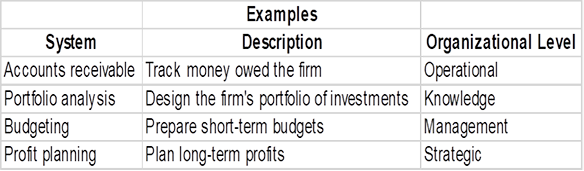
Figure: 1
Following are the list of activities that limit productivity the most currently. The current business model offering accounting job position has following areas to work upon:-
- High amount of manual works
- Huge data to manage
- Difficult to retrieve information at the time of its use
- Security issues
- Confidentiality issues
- Integration problems
- Authorization concerns for access of such documents.
- Lack of automated systems to control inflows and outflows
- Challenges in real time reporting systems
- Storage
- Authentication of various reports
- Lack of clarity in showing the actual financial position of an organization
The potential of mentioned information systems to improve the given profession and above all improvements at a high level could be summarised as: automation, information, transformation.
- Decision making,
- e-business,
- process modelling,
- business intelligence,
- Enterprise computing (ERP, SCM, CRM), etc
- Data privacy
- Ethics in IT in an organisational context.
Here ‘to-be’ picture shows the profession at some time in the future with the implementation of various ISO concepts of information system. The time frame is flexible and may be five, ten, twenty or thirty years into the future. The future of the accountant job describes that there is a strong need for the implementation of ISO concepts of the various information systems for automatisation of operations and easy flow of information within the accounting department and within the organization at large. The future of the jobs accountant jobs aims towards setting an information system where all information within an organization is stored at one place and all reports are system generated to make it more accurate and reliable for analysis. (Lim 2013)
Flow Charts
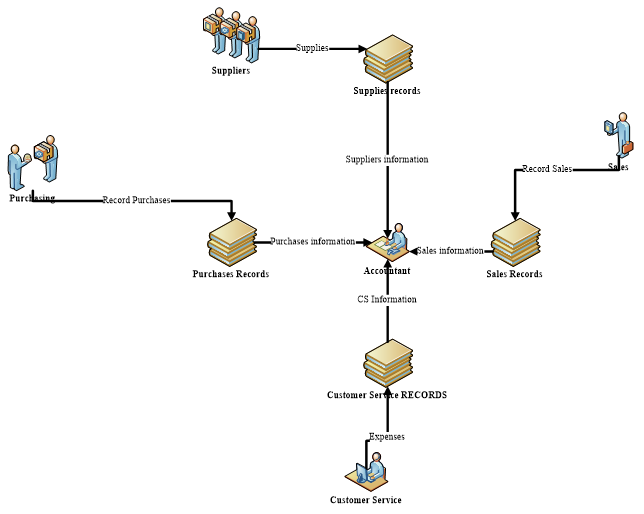
Flow Chart indicating ‘As-Is’ situation of the accountant job in an organisation
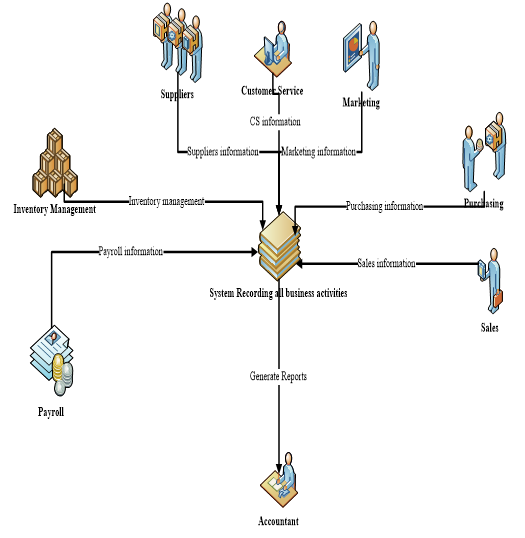
Figure 3:‘To-Be’ Flow Chart of the Accountant Job with the implementation of proposed Information Systems
Discussions
The ISO concepts of information systems help in creating many exciting opportunities by enriching various key activities of the accounting job. Some of these activities are listed below:-
Management of the cash inflow – Ensuring proper records keeping of various receipts and payments into the organization. Identifying each of the single payments with a specific client or customer of the organization. Generating systematic records for future decision making processes in the organization (Cheffi & Beldi 2012).
Management of cash outflows – guided by a pre-prepared budget to meet day to day operational objectives. It also helps in the management of the various other expenses of the organization.
Payroll management – carried out in collaboration with the Human Resource department of an organization ensuring salary is prepared and approved with the necessary taxes, statutory deductions and all the other deductions determined. It also ensures that salaries for each employee is paid by transferring money from the bank account of the organization to the bank account of the specific employee through speedy forms of payment
Financial position of the organization– The job review various fixed assets that are owned by an organization. These assets are very important as they have to be tracked to show their depreciation or appreciating and how that is affecting the value of the organization.
Financial reporting -. This is carried out by preparing the various financial reports as specified by the various financial standards that an organization conforms to. These financial reports include preparing of Profit and Loss Accounts statements for the organization, balance sheets for the organization and the various budgets that guide the spending within the organization. The key benefits of each information system in developing the current state of given profession of accountant, with the time frame of approximately 15-20 years are being discussed below
E-Business
E-Business is the business model that enables business organizations to exchange information, value and services with their customers using information technology. This helps in ensuring that the business organizations are able to increase their sales, reduce transactions costs and increase flexibility in their interaction with various stakeholders within the organization. This is achieved by ensuring that all business activities between the organization and the customers are carried out over the internet. In some instances E-business may also support processing of payments and actual payments that are either done using credit cards or through mobile money transfer services (Chen & Holsapple 2013).
To ensure that E-business is successful, organizations must ensure that there are the necessary systems that will support the various business transactions to be carried out over the internet.
Current State of E-Business Models Being Employed in Accounting
This is the business model that allows the trade interaction between the organization and other business entities. This ensures that the two or more businesses can carry out trade relationships that involve buying, selling, partnering, bartering and trading between the business entities. This is mainly used to manage the various specific activities including procurement where organizations are able to access goods and services from other business entities (Abdollahi, 2011). The accounting department is able to manage cash outflows by ensuring that all procurement requests are carried out on these systems.
E-Business Models for future jobs to be Employed in Accounting
Storefront Model– This model would ensure that customers can be able to shop online from the business organization. This model combines transaction processing, security, online payments and storage of information that enable customers to buy goods and services from the business organization. The business organization will ensure that there is a catalog of the products and services that are being offered to the customers so that the customers can visit the website and select the goods and the services that they will need to purchase. The customers should then be allowed to create accounts and carry out the various ordering and payment processes that enable them to order and make payments for the goods or services they would wish to purchase. Customer data management should also be managed from the system. This will ensure that the accounting department’s work of managing cash inflow from sales is simplified by ensuring that a centralized system where all sales are recorded is offered by this model.
Dynamic Pricing Model– This model will enable the customers to name the prices of the goods and the services they are purchasing from the organization. This hence ensures that there is no need for the customer to contact the organization so as to negotiate for the prices hence reducing the various operational expenses that are managed by the accounting department. This model hence offers a bargaining platform for the customers with the business organization from where after the prices are agreed the customers can be able to order the goods or services or create a shopping cart for future ordering. By using these model, the business organization also is able to promote bulk buying of the goods or services as the customers are able to create their own prices which can enable them to afford to buy in bulk. The system then offers a centralized data center from where various financial reports and accounting functions can be carried out by the accounting department.
E-Business Model and Supply Management– The expansion of the business to business model of the E-business would be a very useful in the supply chain management in the organization. The organization is able to carry out various procurement activities in this business model which ensures that the organization is able to order for goods or services from their suppliers. This system would also manage the recording of the various prices for the procurements made hence enabling the organization accounting department to either approve the procurements made by the different departments in the organization before they can be sent to the suppliers for them to supply the various products and services that have been ordered by the organization.
Challenges
The main challenge with these strategies is the fact that the systems tend to be very complicated with a lot of steps that users have to go through before the procurement can be carried out. This means that a lot of time may be taken before an order is made especially when new suppliers are being added into the system.
Security Issues
Various security issues are associated with E-business. The main security issue is the denial of service where malicious users spam the websites or use viruses to attack the websites hence denying the users access to the website.
Business Intelligence and Decision Making
Business intelligence refers to the various processes wherein various tools and techniques are used in the conversion of raw data into meaningful information that supports various business decisions. It helps in the efficient management of information, knowledge and the various technologies in various operations within the business organization. It also helps in the collection of this information from the various sources and providing access to this data to produce more logical and useful information for decision making processes.
Current State of Business Intelligence and Decision Making being Employed in Accounting
The Business Intelligence in accounting monitors business activities and collects data through historical data indicating various trends or anomalies. Strategic Business Intelligence data for accounting in the organization include the sales volumes, pricing, the profit share, share holder`s stake of the organization.
Business Intelligence & Decision Making Models for future jobs in Accounting
Data Collection– The Business Intelligence in accounting will ensure that organizations are able to identify various business opportunities, threats, and inefficiencies and offer solutions. Tactical business intelligence data will help to meet the needs of the business in providing business trends within the different time periods. Strategic Business Intelligence data will aim in analyzing the various performance metrics for accounting in the organization that include the sales volumes, pricing, the profit share, share holder`s stake of the organization.
Business Decisions – The strategic decision will enrich accounting jobs by analyzing performance parameters of various departments of the business organization, understanding loss making units , control of expanses, overheads, depreciation etc . Besides this, working on increasing the profits of the business organization by strategically increasing the sales volumes for the business organization also widens the scope of work of an accountant in future. The future accountant job role can include taking advantage of the various business opportunities by analyzing the balance sheet.
Challenges
The accounting jobs might needs to come up with new sales targets for the sales department so that the projected increase in the sales volume can be achieved. The accounting department will need to review all the business functions and help in reducing the operational expenses in each of the departments. The accounting department also needs to review the expenses of the organization and come up with strategies to reduce these expenses and increase the revenues of the company.
Security Issues
Various security issues are associated with Business Intelligence and Decision Making. The main security issue is the malicious use of confidential data of the organization by the department. This raises the question of employee`s integrity.
Enterprise Computing
Enterprise computing is the business oriented information technology that encompasses the various software applications including database management, relationship management which controls the operations of an organization at an enterprise level. Enterprise applications are those software applications that are used to manage the operations and satisfy the needs of an organization without focusing on the individual (Simon 2012). ERP helps accountants in the tracking of the various expenses and revenues within the organization, preparation of payrolls for the employees of the organization and also in the management of the various assets for the organization.
Current State of Enterprise computing being Employed in Accounting
The Enterprise computing that is currently being used in the accounting job is the ERP integrates various applications within a business organization to ensure proper collection, storage, management and interpretation of data for the various accounting functions of the organization. ERP systems deployed also integrate manufacturing processes, marketing and sales, inventory management and shipping and payments within the organization. It tracks the flows of resources within the organization including cash, raw materials, production capacity etc. It also supports in ordering of goods and services, purchases from suppliers and payroll management for the employees of the organization (Lečić & Kupusinac 2013).
Enterprise Applications for future jobs in Accounting
ERP have the most potential to improve the job of accountant in future. The ERP has a great potential to improve the performance of the organization in terms of improving the sales of the organization. This is done by tracking the performance of each of the individual salesperson to ensure that targets that are set are met. The system also helps in ensuring that it is possible to track the sales made for each of the customers and hence it makes it possible for the company to come up with the various strategies to improve the sales of the company. Future role of ERP system in accounting ensures that the organization is able to plug in overheads expenses over a short time period and hence can reduce the overall cost (Lečić & Kupusinac 2013). Some of the areas that might improve future accounting jobs are discussed below:-
CRM– The integration of Customer Relations Management system with ERP system will help in the effective management of customers’ information and servicing on the basis of authentic and relevant data. This will ensure in knowing their customers better from organization point of view and offering correct products and services. This help in the improvement of the sales of the organization also. The cost benefit analysis done on the accounting data helps to tap the new opportunities that the business effectively. The company can also diversify their products and services so as to ensure that there is a spread in terms of the number of target customers that the organization serves. The integration will help in the improvement of the speed of processing of the customer orders by accounting hence ensuring that customers do not have to wait for long before their orders are processed. This hence leads to high quality customer support which increases customers’ loyalty.
Summary
The information system plays a very vital role in aligning strategies related to people, process, culture and infrastructure in an organization to reap maximum benefits for the companies. The system has the capacity to improve and enrich the future of any job provided company is equipped enough to invest in the technological advancements. It provides a framework for companies to evaluate themselves and improve on certain critical dimensions to gain competitive advantage.
References
- Abdollahi G 2011, “A Classification of Business Model Types in E-Commerce”, Association for Information Systems, 8, pp. 1-15.
- Cheffi W, Beldi A 2012, “An Analysis of Managers use of Management Accounting”, International Journal of Business, 17, No. 2, pp. 113-125.
- Chen L, Holsapple CW 2013, “E-Business Adoption Research: State of the Art”, Journal of Electroni Commerce Research , 14, No. 3, pp. 261-286.
- Lečić D, Kupusinac A 2013, “The Impact of ERP Systems on Business Decision-Making”, TEM Journal, 2, No. 4, pp. 323-326.
- Lim FP 2013, “Impact of Information Technology on Accounting Systems”, Asia-Pacific Journal of Multimedia Services Convergent with Art, Humanities and Sociology, 3, No. 2, pp. 96-106.
- Niranjanamurthy M, Chahar D 2013, “The Study of E-Commerce Security Issues and Solutions”, International Journal of Advanced Research in Computer and Communication Engineering , 2, No. 7, pp. 1-12.
- Ranjan J 2009, “Business Intelligence: Concepts, Components, Techniques and Benefits”, Journal of Theoretical and Applied Information Technology, 9, No. 1, pp. 60-70.
- Simon A 2012, Network re-engineering: Foundations of enterprise computing, Academic Press, Waltham
- Trigo A, Belfo F, Estebanez RP 2014, “Accounting Information Systems: The Challenge of Real-Time Reporting”, Procedia Technology, 16, pp. 118-127.
As a leading academic writing service provider, we aim to make accounting case study assignment help affordable for all students. With 24*7 student service, we are an ideal partner for your academic assignment help. Visit our website or ring us at +1(240)2885849 for more information.