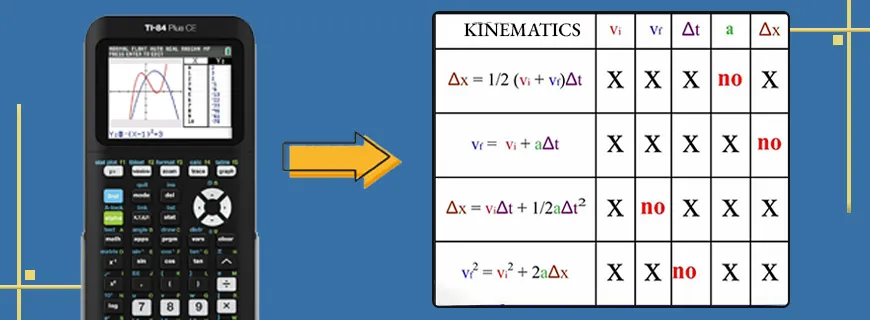


In the world of physics and engineering, understanding the motion of objects is crucial. Kinematics, a branch of classical mechanics, deals with the motion of objects without considering the forces causing it. To analyze motion accurately, students and professionals often rely on kinematic equations, which relate displacement, velocity, acceleration, and time. Solving these equations manually can be challenging, especially when dealing with complex problems or multiple variables. This is where a kinematic equation calculator comes into play, offering a fast and precise way to determine key motion parameters.
What is a Kinematic Equation Calculator?
A kinematic equation calculator is a specialized online tool designed to simplify calculations related to linear motion. It allows users to input known variables—such as initial velocity, final velocity, acceleration, and time—and instantly computes unknown parameters. This calculator is especially beneficial for students who struggle with solving motion equations step by step. Whether you are a high school student learning physics or a mechanical engineering student tackling complex projects, this tool saves time and reduces errors.
Benefits of Using a Kinematic Equation Calculator
Using a kinematic equation calculator provides multiple advantages:
- Enhances Learning: Students can check their solutions quickly and understand the relationship between motion variables. This is particularly helpful for those seeking Kinematics and Dynamics assignment help.
- Time-Saving: Manual calculations for displacement, velocity, and acceleration can be tedious; the calculator provides instant results.
- Accuracy: Reduces human error in calculations, ensuring correct results for assignments and exams.
Importance for Mechanical Engineering Students
For mechanical engineering students, mastering motion analysis is essential. Mechanical systems often involve moving components, and accurate motion prediction is crucial in design and analysis. A kinematic equation calculator streamlines calculations for velocity, acceleration, and displacement in mechanical systems. Students seeking mechanical engineering assignment help can greatly benefit from incorporating this tool into their workflow, ensuring precision and efficiency in their assignments.
Application in Case Studies
The scope of the Kinematic Equation Calculator extends beyond classroom exercises. Many engineering assignments, including robotics, automotive systems, and structural mechanics, require precise calculations of object motion. By leveraging this calculator, students can complete these tasks more efficiently. Combining this tool with case study assignment help allows learners to apply theoretical knowledge to real-world scenarios, enhancing their analytical and problem-solving skills.
Mathematics Behind Kinematic Equations
Mathematics plays a significant role in motion analysis. The kinematic equations are rooted in algebra and calculus principles. For students who struggle with mathematical manipulations, a Kinematic Equation Calculator is a practical solution. Those seeking mathematics assignment help can gain additional support, understanding the principles behind motion equations and how to apply them effectively.
Core Kinematic Equations
A typical kinematic equation calculator handles the four main kinematic equations:
- v=u+atv=u+atv=u+at
- s=ut+12at2s = ut + \frac{1}{2}at^2s=ut+21at2
- v2=u2+2asv^2 = u^2 + 2asv2=u2+2as
- s=(u+v)2×ts = \frac{(u+v)}{2} \times ts=2(u+v)×t
Here, uuu is the initial velocity, vvv is the final velocity, aaa is acceleration, ttt is time, and sss is displacement. By inputting the known variables, the calculator automatically determines the unknown ones, eliminating repetitive manual work.
Step-by-Step Solutions for Better Understanding
Many online kinematic equation calculators provide step-by-step solutions. This is useful for learners who want to understand the process, not just the result. By observing how each variable interacts within the equations, students gain a better grasp of motion dynamics. For instance, students using Kinematics and Dynamics assignment help can combine insights from the calculator with expert guidance to submit high-quality assignments.
Real-Life Applications
The Kinematic Equation Calculator is also valuable in real-life engineering scenarios. Automotive engineers use kinematic equations to predict vehicle motion under varying conditions, while robotics engineers apply these principles to control robotic arm movements accurately. Familiarity with this calculator during studies equips students with practical skills that are directly transferable to professional environments.
Conclusion
In conclusion, the Kinematic Equation Calculator is more than just a computational tool—it is an educational companion for students and professionals alike. By simplifying complex calculations, providing instant results, and offering step-by-step solutions, it supports learning and enhances understanding of motion analysis. Students seeking kinematics and dynamics assignment help, mechanical engineering assignment help, case study assignment help, or mathematics assignment help can significantly benefit from incorporating this tool into their academic routine. Embracing such technology ensures accurate calculations, improved comprehension, and greater efficiency, ultimately contributing to better academic and professional outcomes.